History of the institution and building
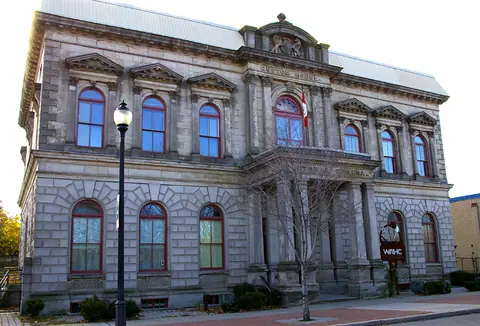
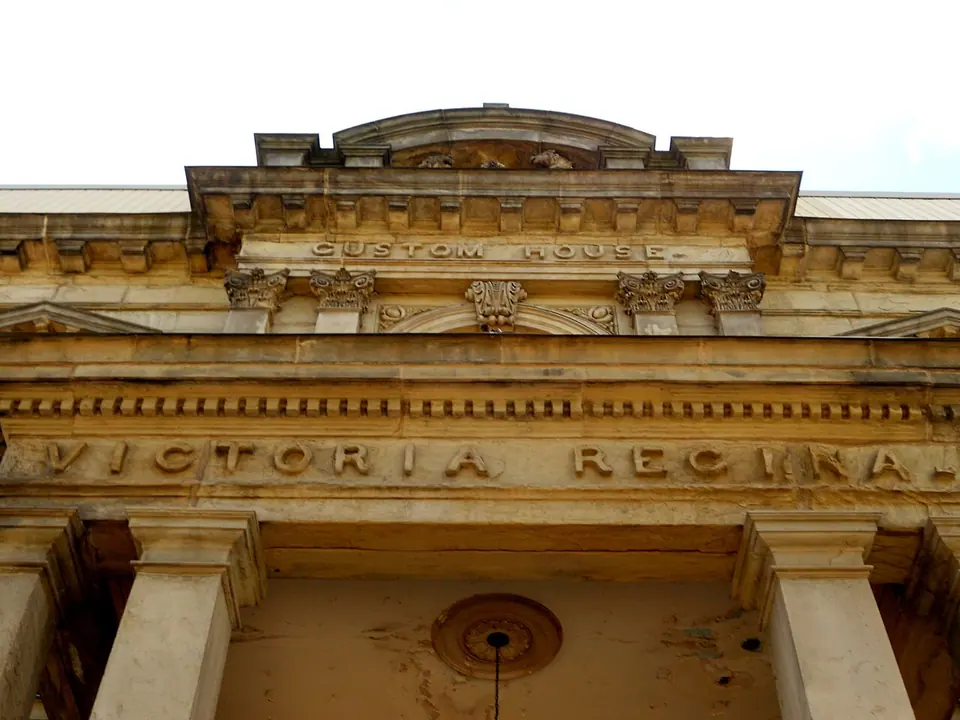
The Workers Arts and Heritage Centre was conceived in the late 1980s by a dynamic group of labour historians, artists, and union and community activists who gathered to discuss the need for a place where workers' history could be celebrated. It was incorporated as the Ontario Workers Arts and Heritage Centre in 1991. In 1995, after intense work by a volunteer board of directors, the organization purchased the historic Custom House on Stuart Street in the north end of Hamilton. The building, founded in 1860, had stood deserted until its purchase. Over $1.5 million was invested in the restoration of this majestic historic building, which is a designated National Historic Site. The centre opened to the public in 1996 with its first exhibition titled What We Fought For. In 2001, the institution was renamed the Workers Arts and Heritage Centre to reflect its widening scope and mandate. The building received an Ontario Society of Architects Recognition Award and a Hamilton Sustainable Community Recognition Award in 1999. The centre is situated on the traditional territories of the Erie, Neutral, Huron-Wendat, Haudenosaunee and Mississaugas, and acknowledges the Dish With One Spoon Covenant. The history and culture preserved at the centre is directly linked to the land, through the work it documents and where it does it.

Collection and permanent focus
The Workers Arts and Heritage Centre holds a permanent collection of artifacts related to labour history and workers' experiences. The museum is noted for holding one of the most significant collections of trade union banners in the country. The collection includes historical objects such as punch clocks, retirement wrist watches, a food courier's delivery bag, and IWW songbooks from 1968 and 1970. It also includes the Condé Memorial Collection, featuring works like the Button Banner by artists Carole Condé and Karl Beveridge. The centre's mission is to preserve, honour and promote the culture and history of all working people, with a vision expanded to include both paid and unpaid work. The contributions of working people in Canadian history and worldwide are presented in art, exhibits, and performances. The centre's location in Hamilton is significant as the city is considered the cradle of Canada's labour movement, site of the first Nine-Hour Movement demonstrations and the influential steelworkers' strike of 1946. The centre acknowledges the great cost paid by Indigenous people that industrial expansion has caused, and highlights Indigenous relationships to the land, and understandings of labour and work, past, present and future.
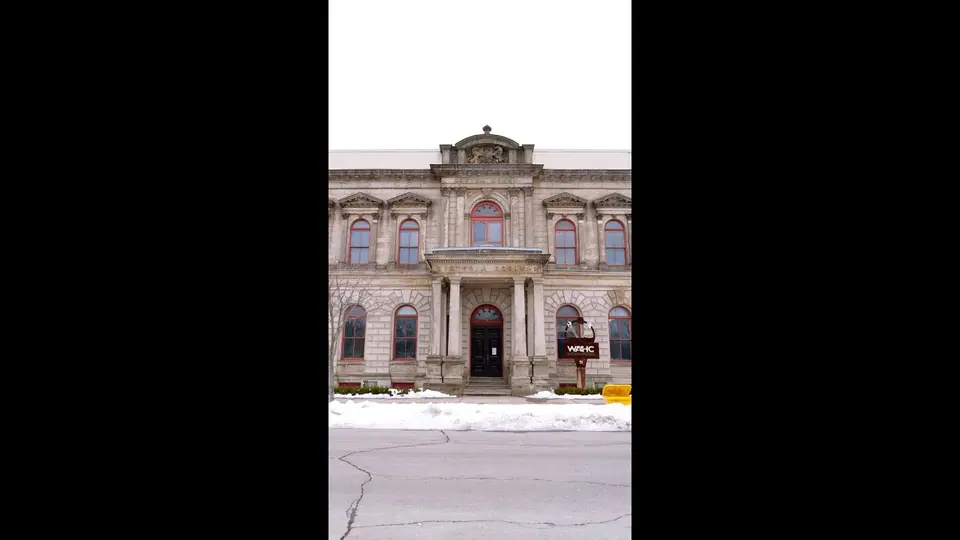 Play video: Workers Arts and Heritage Centre
Exhibitions and artistic programming
The Workers Arts and Heritage Centre presents both historical and contemporary exhibitions. Initially, it exclusively mounted historical exhibitions focused on the labour movement. Arts programming began in 2007, with three contemporary exhibits in the Main Gallery becoming a permanent feature by 2009. A major early project was the multi-media travelling exhibition and still I rise: African Canadian Workers in Ontario,1900 to 2000, which launched in 2003 in partnership with the African Canadian Workers Advisory Committee. Recent and upcoming exhibitions have included thematic series like The Future of Work, presented in collaboration with the Art Gallery of Burlington. One exhibition, Para Ayer/Due Yesterday by artist Anahí González, used photography, installation, and participatory works to examine labour within trade networks connecting Mexico and Canada. Another exhibition, Made in Hamilton: Objects and Stories, highlights local industrial history. The centre has also presented exhibitions such as Some Women of Porcupine Camp: An Illustrated Spoken History in 1997, Booze: Work, Pleasure and Controversy in 1998, and an International Women's Day exhibition in 1998 titled Women Measuring The Health Of Our Community: Is It Working For Us. The centre brings together members of the community, unions, local arts organizations, workers' groups, and artists to share and celebrate the stories of working people through these collaborative ventures.
- Exhibitions have explored subjects like healthcare for precarious workers and the future of the garment industry.
- The exhibition Thirty for Thirty featured signs from The Lusty Lady from 2000 and the photo series No Trespassing by Cees van Gemerden from 1989.
- Programming aims to be inclusive of the experiences and histories of the least visible work and workers.
- The centre's arts programming did not begin until 2007 with three contemporary exhibits in the Main Gallery.
- At the outset, WAHC exclusively mounted historical exhibitions that explored the lives of working people locally and provincially.

Programs, events and education
The centre offers a diverse array of workshops, educational programs, digital projects, and community events. The centre provides school visits for groups, with tours and workshops connected to the Ontario Ministry of Education curriculum. School visits typically cost $8 per student for primary and secondary students, with a subsidy program available through the Hamilton Community Foundation if cost is a barrier. The centre can accommodate a maximum of 30 students per visit, and visits should be booked at least six weeks in advance. Public workshops are also offered, such as a natural pigment making session with artist Michelle Peraza and a Floetry workshop exploring connections to water and the natural world. During community festivals like Supercrawl, the centre often offers free workshops and exhibits. The centre has historically provided artistic and cultural programming for the Hamilton and District Labour Council's Labour Day parade, with musicians performing labour songs from a pick-up truck parked in front of the building. The centre strives to be an accessible place for all and provides wheelchair accessible facilities and a quiet zone with sensory supports.
- School visit themes include learning about the Haldimand Tract and Indigenous stewardship, the Days of Action and community activism, Canadian union history and the Nine Hour Movement, and using art and music for social change.
- Visits can be customized for post-secondary groups interested in the intersections of art, labour, and activism.
- It has participated in Doors Open Ontario events, offering extended hours on Saturday from 10 a.m. to 4 p.m.
- Early exhibitions included What We Fought For at its 1996 opening.
- The centre asks that visitors reflect on the ways they work on the land, and how they uphold the Dish With One Spoon Covenant in their daily lives during their visit.
- Robert Blakely, President of Canada’s Building Trades Unions, has stated that the centre is the one place in Canada where the history of the labour movement and its members is kept.
Admission and visiting details
Admission to the Workers Arts and Heritage Centre is free. The centre is closed on the National Day for Truth and Reconciliation and over the last two weeks of the year, including Christmas Day, Boxing Day, and New Year's Day. The building is wheelchair accessible. The institution's public hours are Wednesday to Friday 10 a.m. to 4 p.m. and Saturday noon to 4 p.m. Visitors are advised to check the centre's homepage and social media for any closures due to event rentals or unforeseen reasons. The centre acknowledges that the history and culture it preserves is directly linked to the land and asks visitors to reflect on the ways they work on the land during their visit. School groups must provide a minimum of 48 hours notice for cancellations as a courtesy.
| Day | Hours as listed on OpenStreetMap |
|---|---|
| Monday | Not listed |
| Tuesday | Not listed |
| Wednesday | 10 a.m. to 4 p.m. |
| Thursday | 10 a.m. to 4 p.m. |
| Friday | 10 a.m. to 4 p.m. |
| Saturday | noon to 4 p.m. |
| Sunday | Not listed |

Getting there and the neighbourhood
The Workers Arts and Heritage Centre is located at 51 Stuart Street in the Beasley neighbourhood of Hamilton's lower city. The Beasley neighbourhood is one of the oldest in Hamilton, bounded by the CNR tracks near Barton Street, James Street, Main Street, and Wellington Street. It is named after Richard Beasley, one of Hamilton's first settlers. The nearest GO Transit rail station is West Harbour GO, located 0.1 kilometres away, which provides hourly service on the Lakeshore West line to Toronto's Union Station. The station opened in 2015 and phase one construction was estimated to cost $3 million. Local public transit is operated by the Hamilton Street Railway (HSR), with routes including the 1 King, 2 Barton, 3 Cannon, and 10 Beeline Express serving the area. The centre is situated in a historically working-class area near Hamilton Harbour, in the heart of a working-class neighbourhood. The building is in close proximity to several restaurants, cultural institutions, and parks including Pier 4 Park and Beasley Park. The area is also near the Harbour West Marina Complex, the Macassa Bay Yacht Club, and the Royal Hamilton Yacht Club.
- Mesa, a restaurant, is 380 metres away.
- Crystal Dynasty, a restaurant, is 620 metres away.
- The Art Gallery of Hamilton is 1.1 kilometres away.
- FirstOntario Concert Hall is 1.2 kilometres away.
- radius, a restaurant, is 1.2 kilometres away.
- Whitehern Historic House is 1.4 kilometres away.
- The historic LIUNA Station events centre, the renovated former CN James Street Station, is located nearby on James Street North.
- The neighbourhood also contains the Baltimore House music venue, the Seventy-Seven Night Club, and the Hamilton Downtown Mosque.
Nearby
- 1MesaRestaurant380 m
- 2Crystal DynastyRestaurant620 m
- 3Art Gallery of HamiltonMuseum or gallery1.1 km
- 4FirstOntario Concert HallTheatre or hall1.2 km
- 5radiusRestaurant1.2 km
- 6Whitehern Historic HouseMuseum or gallery1.4 km
Straight-line distances computed from OpenStreetMap coordinates.
Questions
What is the Workers Arts and Heritage Centre?
The Workers Arts and Heritage Centre is a museum and multidisciplinary art centre in Hamilton, Ontario, dedicated to labour history and the culture of working people. It was founded in 1995 and is housed in the historic Custom House, a National Historic Site. It is Canada's only brick-and-mortar museum with this specific focus. The centre presents exhibitions, maintains a permanent collection of labour artifacts, and runs educational programs and community events.
Is there an admission fee for the Workers Arts and Heritage Centre?
Admission to the Workers Arts and Heritage Centre is free. The institution states that all visitors can enter without charge. It offers free and accessible programming as part of its mandate. Some specific programs, such as school visits, have associated fees, but a subsidy program is available. The centre's major annual fundraiser is the Sam Lawrence Dinner, which requires purchased tickets.
What are the opening hours for the Workers Arts and Heritage Centre?
The public hours for the Workers Arts and Heritage Centre, as listed on OpenStreetMap, are Wednesday through Friday from 10 a.m. to 4 p.m. and Saturday from noon to 4 p.m. The centre is closed on Monday, Tuesday, and Sunday. It closes on the National Day for Truth and Reconciliation and over the last two weeks of the year. Visitors should check the centre's website or social media for any unexpected closures.
Is the Workers Arts and Heritage Centre wheelchair accessible?
Yes, the Workers Arts and Heritage Centre is wheelchair accessible. The building provides wheelchair accessible facilities. The institution's school visits information also notes it provides a quiet zone with sensory supports. The centre strives to be an accessible place for all visitors and asks that groups inform them of any specific needs when booking visits.
Can school groups visit the Workers Arts and Heritage Centre?
Yes, the Workers Arts and Heritage Centre welcomes school groups, camps, and extracurricular groups. Visits are typically one hour for a tour or two hours for a tour and workshop. The centre can accommodate a maximum of 30 students per visit. Tours are typically $8 per student for primary and secondary students, with a subsidy program available through the Hamilton Community Foundation. Visits must be booked at least six weeks in advance and are connected to the Ontario curriculum.
What is in the Workers Arts and Heritage Centre's collection?
The Workers Arts and Heritage Centre holds a permanent collection of artifacts related to labour history and workers' experiences. It is noted for having one of the most significant collections of trade union banners in Canada. The collection includes historical objects such as punch clocks, retirement wrist watches, and a food courier's delivery bag. It also holds contemporary art and archival materials that explore themes of work and social justice. The collection supports both historical and contemporary exhibitions.
Sources
- Homepage, Workers Arts and Heritage Centre, wahc-museum.ca.
- “...and still I rise”, Hamilton Civic Museums, Hamilton Civic Museums.
- At a museum for the art of work, these are its masterpieces | CBC Arts, CBC News.
- Ticket-free workshops and exhibits during Supercrawl weekend held by Workers Arts and Heritage Centre, The Hamilton Spectator.
- Doors Open Ontario, Workers Arts and Heritage Centre (Custom House), doorsopenontario.on.ca.
- Workers Arts and Heritage Centre, Building Cultural Legacies Hamilton, buildingculturallegacies.ca.