History of the house and family
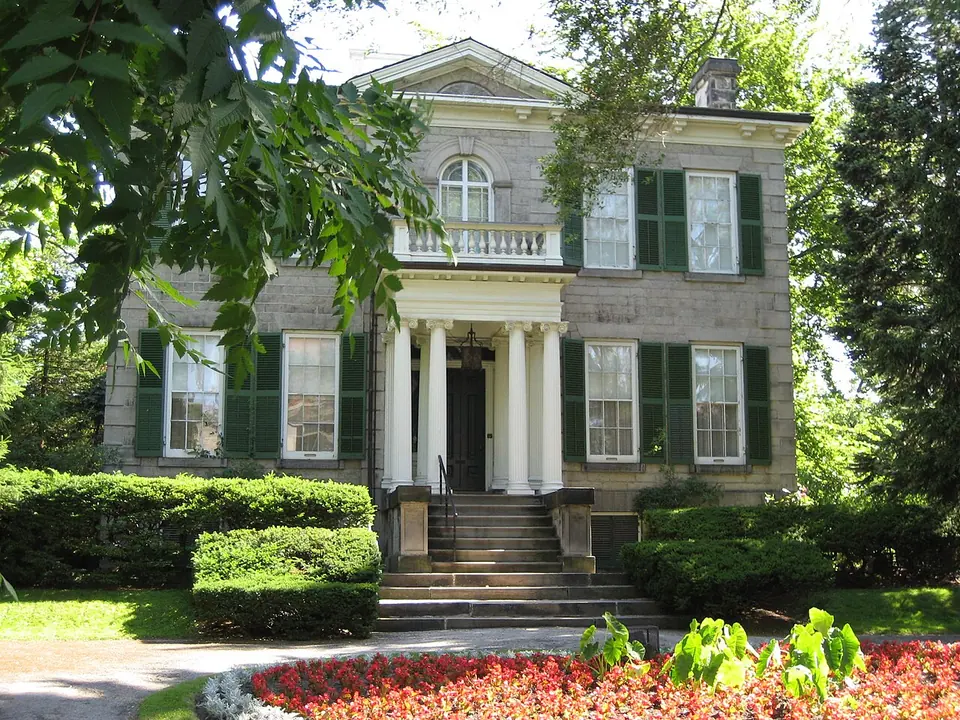
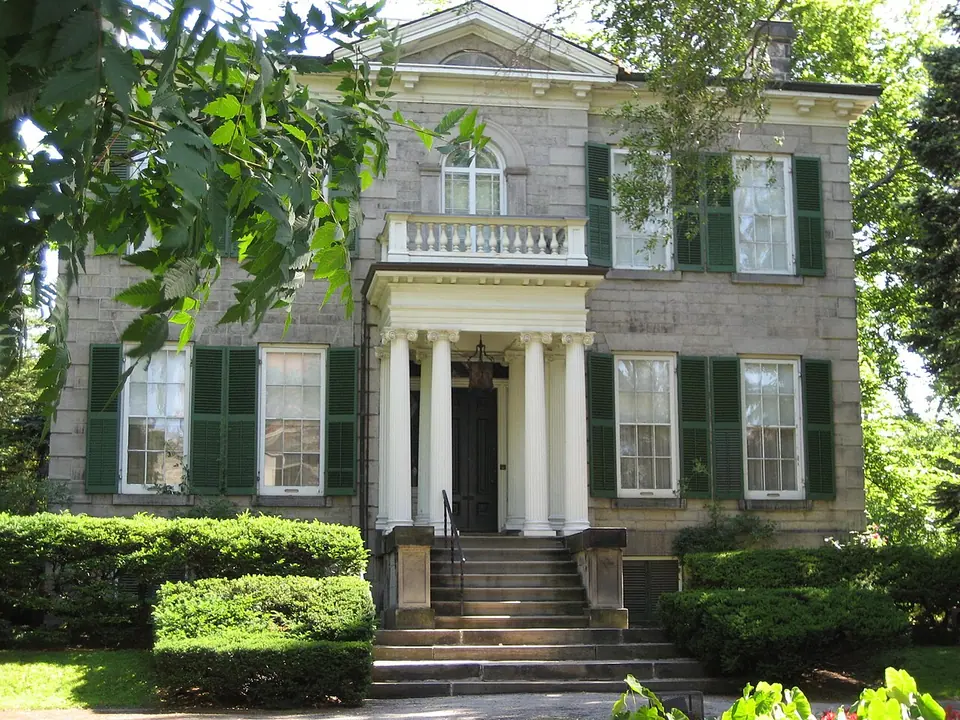
The house was originally named Willowbank and was built for city clerk and attorney Richard Duggan. Dr. Calvin McQuesten, an American from New Hampshire, came to Hamilton and purchased the property in 1852 for 800 pounds. The home remained in his family for three generations. The last generation consisted of six siblings who never married. In 1959, the three surviving family members, Mary Baldwin, Reverend Calvin, and Hilda, made an agreement with the City of Hamilton to bequeath the house and all its contents upon their deaths. In return, the municipality would maintain the home and free them from paying property taxes during their lifetimes. The last sibling died in 1968, transferring the property. After restoration, Whitehern opened as a museum in 1971. The McQuesten family were prominent Hamilton figures. Calvin established a successful foundry with his cousin John Fisher, and his grandson Thomas McQuesten was a provincial politician who helped bring McMaster University to Hamilton and oversaw the creation of the Royal Botanical Gardens and the Queen Elizabeth Way. The family's private life, documented in their extensive letters, included struggles with mental health and addiction, and periods of financial difficulty.

The collection and house tour
The museum's significance lies in its remarkable state of preservation, with the entire contents of the house being original to the McQuesten family. This provides a time capsule of life from the Georgian, Victorian, and Edwardian periods up to 1939, when Thomas McQuesten was the Minister of Highways. The collection includes Victorian antiques, rare books, paintings, and photographs. A key archival resource is a meticulously kept collection of 10,000 pages of family letters and documents, which detail both the family's public accomplishments and private struggles. Guided tours are conducted by costumed interpreters portraying the family's servant, Anne Vallesi, from the late 1930s. Visitors enter by ringing the front doorbell. The tour proceeds through rooms that reflect the family's life, including a library with wall-to-wall bookshelves, a bedroom containing childhood toys stored in the attic, and a modern 1930s kitchen added during a renovation that also created servants' quarters. The house has served as a period film location, including for the television series Murdoch Mysteries. The museum is affiliated with the Canadian Museums Association, the Canadian Heritage Information Network, and the Virtual Museum of Canada. The site was designated a National Historic Site in 1962, and a provincial historical marker was erected by the Ontario Heritage Trust.
- The house contains original furnishings from three generations of the McQuesten family.
- A collection of 10,000 pages of family letters and documents provides detailed insight into their lives.
- Tours are guided by interpreters dressed as the family's servant from the late 1930s.
- The library features extensive built-in bookshelves filled with the family's books.
- Childhood toys were discovered stored in the attic, preserved for future generations that never came.
- A modern kitchen wing with an electric refrigerator and stove was added, contrasting with the older parts of the house.
- The home's setup is informed by the recollections of Anne Vallesi, the actual family servant who was still living when the museum was established.
- The house has been used as a filming location for period dramas.
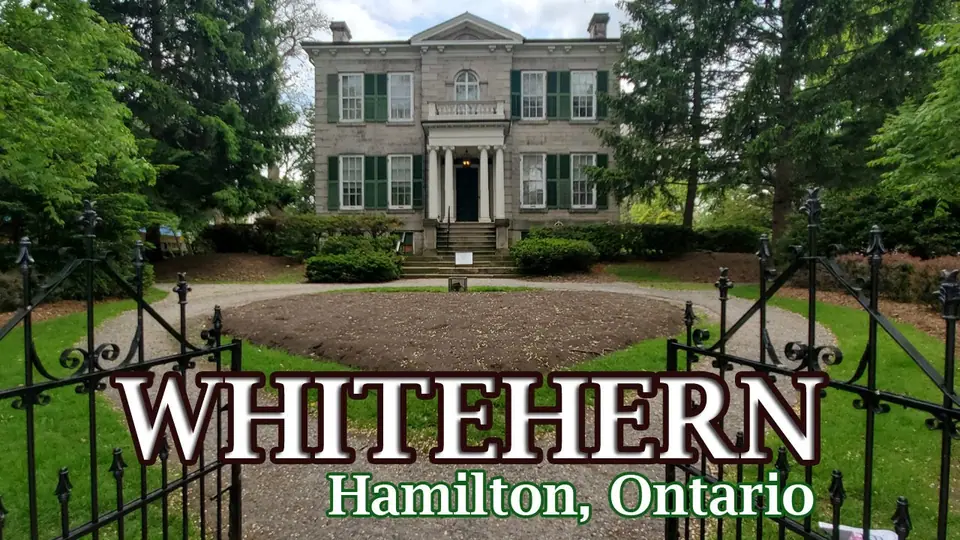 Play video: Exploring Whitehern Estate - Hamilton, Ontario
Garden, events and programs
The property is surrounded by a maintained walled garden, which is free for the public to enter and serves as a peaceful oasis in the downtown core. The museum hosts several annual events and regular programs. In the summer, Wednesdays at Whitehern feature lunchtime concerts in the garden with complimentary iced tea and lemonade. The annual McQuesten Family Christmas event decorates the house in period style from the 1850s to the 1930s, with satin ribbons, Christmas china, and family toys under the tree. Family-oriented programs include a Teddy Bears Picnic with old-fashioned games, a teddy bear parade, and a teddy bear hospital for children aged three to seven. These events typically utilize a building on the property called The Stable, which has tables, chairs, a refrigerator, and a microwave available for use. Birthday parties have a maximum capacity of 15 children and 5 adults, with an option to extend the rental for an additional hour. The basic birthday package includes exploring the historic home set in 1939, visiting The Stable to churn and taste old-fashioned vanilla ice cream, and playing vintage games.

Admission and visiting details
According to its website, Whitehern Historic House is open year-round. The museum is closed on Mondays, Good Friday, Canada Day, Christmas Day, Boxing Day, and New Year's Day. Guided tours are offered at scheduled times. General admission tickets can be purchased online in advance or on-site subject to availability. If tickets are sold out online, they will not be available for purchase on-site. The museum accepts Hamilton Public Library cards for free general admission, one per visitor. The institution states that Whitehern is not fully accessible at this time. According to a visitor account, there is a City of Hamilton parking lot at the corner of MacNab and Jackson Streets, and limited public parking is available at Hamilton City Hall, which is located nearby. Hamilton Civic Museums, the parent organization, is located at 28 James Street North.
| Admission Category | Description |
|---|---|
| Adult | 18 to 54 years |
| Senior | 55+ years |
| Youth | 13 to 17 years with valid student ID |
| Child | 6 to 12 years |
| Infant | 5 years and under |
| Library Card Holder | Free admission with a Hamilton Public Library card (one per visitor) |
Getting there and transit connections
The nearest GO Transit rail station is Hamilton GO Centre, located 0.3 kilometres away. This station is a major hub for GO Transit bus and train services. It is the terminal stop for evening rush-hour Lakeshore West line trains. Off-peak bus service connects to Aldershot Station in Burlington. The station also serves as the western terminus for GO bus routes 16, 18, 40, and 47. The Hamilton GO Centre building itself is a Streamline Moderne structure designed by New York architects Fellheimer & Wagner, which opened in 1933 as the head office of the Toronto, Hamilton and Buffalo Railway. It was converted to a GO Transit facility and reopened in 1996. Many Hamilton Street Railway bus routes stop at or near the Hamilton GO Centre. On June 28, 2009, downtown bus routes were realigned, and new bus platforms inside the GO Centre became the downtown terminus for HSR routes 1 King, 2 Barton, and 3 Cannon. The seasonal route 51 University also stops inside the station's bus terminal.

The downtown neighbourhood
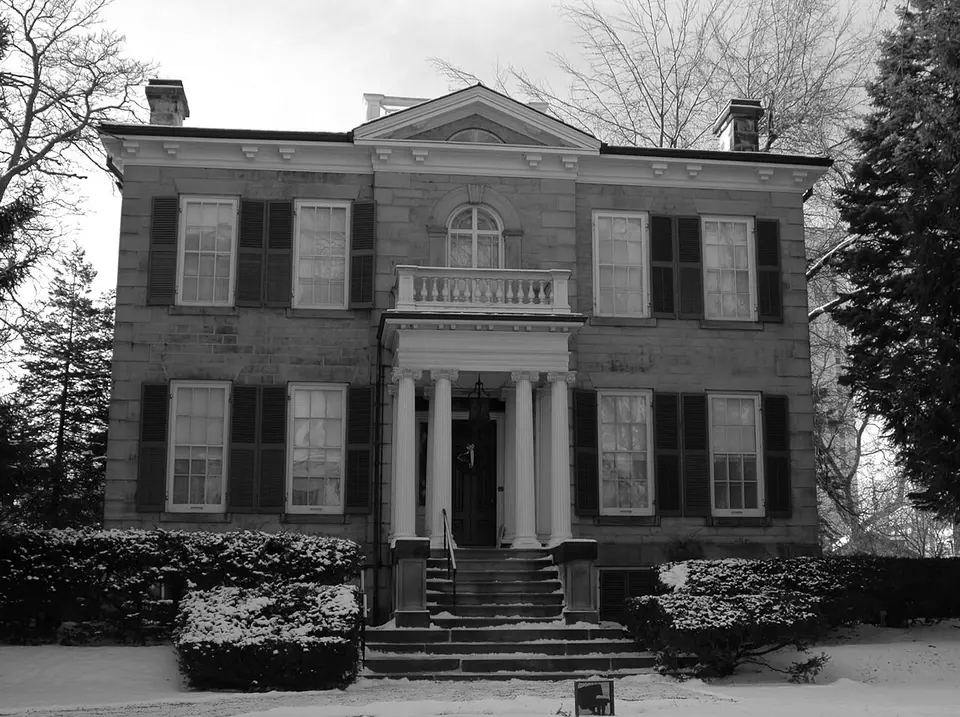
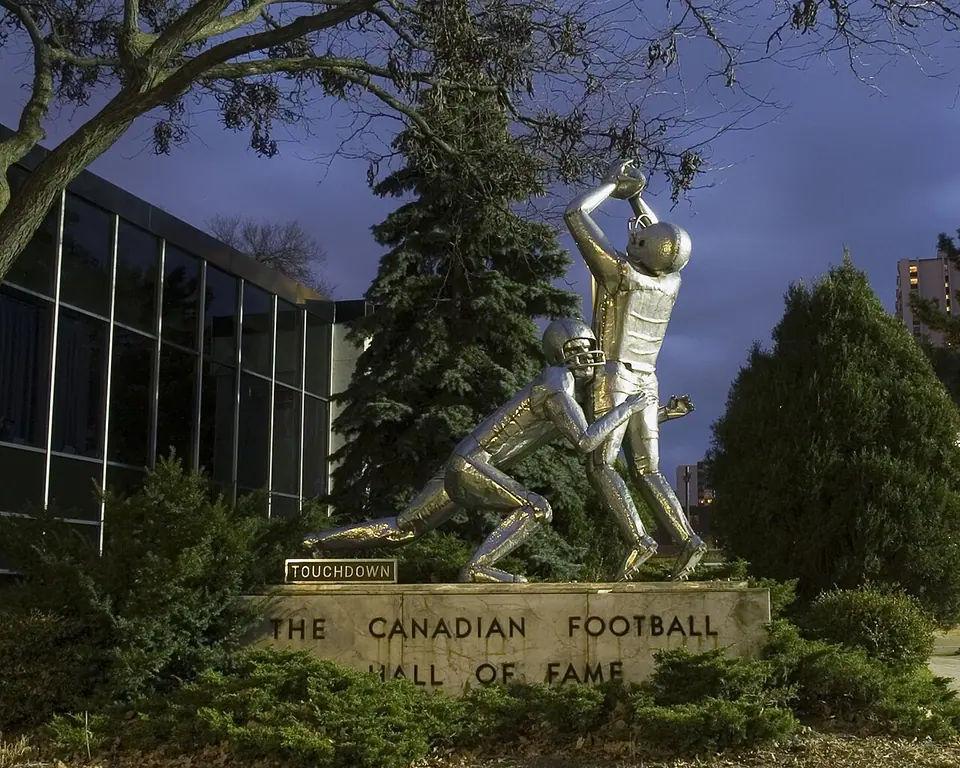
Whitehern is situated in downtown Hamilton, just east of Hamilton City Hall and behind the former Canadian Football Hall of Fame. The museum is on the corner of Jackson Street West and MacNab Street South. The surrounding area includes other cultural venues, restaurants, and bars within a short walk. The area is part of Hamilton's historic downtown core, which was a centre of the Gore District in Upper Canada during the 19th century. Immediately to the north is the Lloyd D. Jackson Square indoor shopping and entertainment complex, which opened in 1972. The civic square was constructed after demolition of businesses began in late 1968.
- Hamilton GO Centre station is 0.3 km away.
- FirstOntario Concert Hall, a theatre or hall, is 190 m away.
- Art Gallery of Hamilton, a museum or gallery, is 290 m away.
- The Ship, a bar or pub, is 320 m away.
- radius, a restaurant, is 640 m away.
- Crystal Dynasty, a restaurant, is 820 m away.
- Mesa, a restaurant, is 1.0 km away.
Research and historical significance
The extensive family archive at Whitehern has been the subject of significant academic and public research. Local historian Dr. Mary J. Anderson earned a PhD from McMaster University for her research into the McQuestens and wrote three books on the family. She also led theatrical productions about them and spearheaded the comprehensive Whitehern Museum Archives website maintained by the Hamilton Public Library. The archive offers a unique window into Victorian family dynamics, revealing both the family's public triumphs and private tribulations. The decision by the last McQuestens to bequeath the intact home, rather than see its contents auctioned, has preserved a rare historical resource. This contrasts with the fate of other Hamilton estates like the 56-room Wesanford mansion, owned by textile entrepreneur W.E. Sanford, which was demolished after the family heirlooms were auctioned off. The Whitehern bequest ensured the house would serve as the family's legacy in lieu of children.

Nearby
- 1FirstOntario Concert HallTheatre or hall190 m
- 2Art Gallery of HamiltonMuseum or gallery290 m
- 3The ShipBar or pub320 m
- 4radiusRestaurant640 m
- 5Crystal DynastyRestaurant820 m
- 6MesaRestaurant1.0 km
Straight-line distances computed from OpenStreetMap coordinates.
Questions
What is the historical significance of the McQuesten family?
The McQuesten family were influential figures in Hamilton's development across three generations. Dr. Calvin McQuesten established a successful foundry with his cousin that contributed to the city's industrial growth. His grandson, the Honourable Thomas McQuesten, was a provincial politician whose work was central to relocating McMaster University from Toronto to Hamilton in 1930. He was also instrumental in the creation of the Royal Botanical Gardens, Gage Park, and the Queen Elizabeth Way highway. The family's extensive personal archive of letters provides a detailed record of both their public contributions and their private challenges with mental health and finances.
Can you visit the garden without going into the house?
Yes, the walled garden surrounding Whitehern is free for the public to enter. Many Hamiltonians visit during lunch hours to enjoy the peaceful and lush setting in the heart of downtown. The garden is also the primary location for special public events like the summer lunchtime concerts on Wednesdays and the Teddy Bears Picnic for children. Attending these garden events does not require purchasing a ticket for the house tour, though access to the interior of the historic home is only available through paid, timed admission. The garden is a public space.
What kind of events are held at Whitehern?
Whitehern hosts a variety of annual and seasonal events. During the summer, the Wednesdays at Whitehern series offers weekly lunchtime concerts in the garden with bottomless iced tea and lemonade. The McQuesten Family Christmas is an annual event where the house is decorated in period style from the 1850s to the 1930s. For families, the Teddy Bears Picnic includes old-fashioned games, a teddy bear parade, and a teddy bear hospital for children aged three to seven. The museum also offers booked birthday party packages that feature historic games, ice cream churning, or tea party themes, utilizing The Stable building on the property for activities and refreshments.
Is Whitehern accessible for visitors with mobility issues?
The museum's website indicates that Whitehern Historic House is not fully accessible at this time. However, the institution's parent organization, Hamilton Civic Museums, lists a commitment to accessibility among its guiding principles. The house is a historic structure built in the mid 19th century, which presents certain physical challenges for modern accessibility standards. Visitors with specific mobility concerns are encouraged to contact the museum directly for detailed information before planning a visit. The museum operates as a civic institution owned by the City of Hamilton.
How did Whitehern become a museum?
Whitehern became a museum through a bequest from the last generation of the McQuesten family. In 1959, the three surviving siblings agreed to leave the house and all its contents to the City of Hamilton upon their deaths, in exchange for the city maintaining the property and relieving them of property taxes while they lived. The last family member died in 1968, transferring ownership. The city then undertook a restoration of the property, which was completed in 1971, at which point Whitehern opened to the public as a civic museum operated by the City of Hamilton's museum system. The family saw the house itself as their legacy.
Sources
- Whitehern, Wikipedia.
- The family legacy behind Hamilton’s Whitehern house, The Hamilton Spectator.
- Explore Hamilton's culture and history this weekend | CBC News, CBC News.
- Whitehern Historic House & Garden National Historic Site, Hamilton Civic Museums, Hamilton Civic Museums.
- Whitehern Historic House & Garden, Tourism Hamilton, Tourism Hamilton.
- Whitehern at Historical Hamilton, historicalhamilton.com.