
History and development
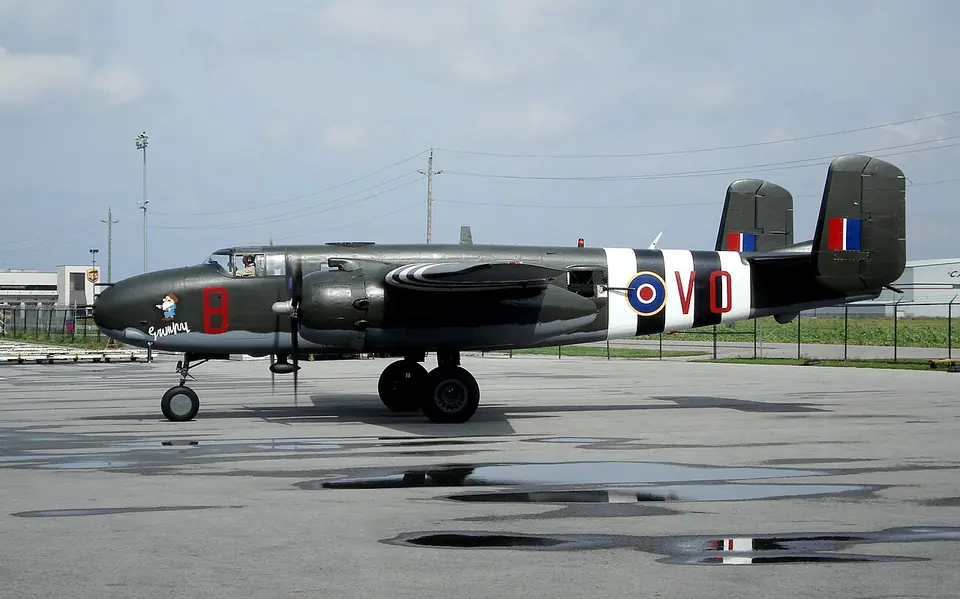
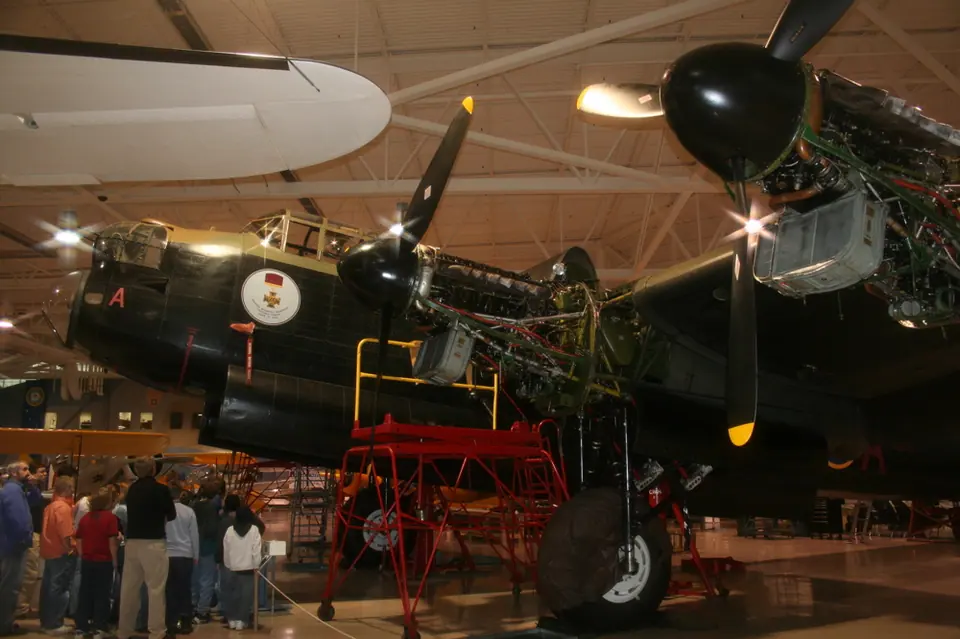
The museum began in 1972 when founders Dennis Bradley, Alan Ness, Peter Matthews, and John Weir moved their first aircraft, a Fairey Firefly, into Hangar 4 at Hamilton Airport. The collection expanded with acquisitions like a B-25 Mitchell in 1975 and an Avro Lancaster in 1977. That same year, co-founder Alan Ness was killed in the crash of the Fairey Firefly at the Canadian International Air Show. A major fire on February 15, 1993, destroyed Hangar 3 and five aircraft, causing about $3 million in damage. The Lancaster was saved by a concrete block wall and was towed from the hangar. Following the fire, a new 108,000-square-foot facility was built with funding from the Canada-Ontario Infrastructure Works Program. This purpose-built hangar was officially opened by Prince Charles on April 26, 1996. The museum has faced other challenges, including financial stress in the late 1990s that led to the sale of a Corsair aircraft, and government-imposed closures in 2020 and 2021 during the pandemic. Dennis Bradley, one of the founding partners, died in 2018. The regional council at the time approved the post-fire building project because it viewed the collection as a significant cultural asset for tourism and economic development.
The museum's founding in 1972 was driven by a shared passion among four friends to honour Canada's military aviation history. Their initial acquisition, the Fairey Firefly, was moved into Hangar 4 at Hamilton Airport, marking the humble start of the collection. A few years later, the museum expanded its physical space by purchasing a second hangar, Hangar 3, to accommodate a growing number of aircraft. This early period of growth was tragically marked by the loss of co-founder Alan Ness in the 1977 crash of that very first Firefly at the Canadian International Air Show.

The aircraft collection and restoration
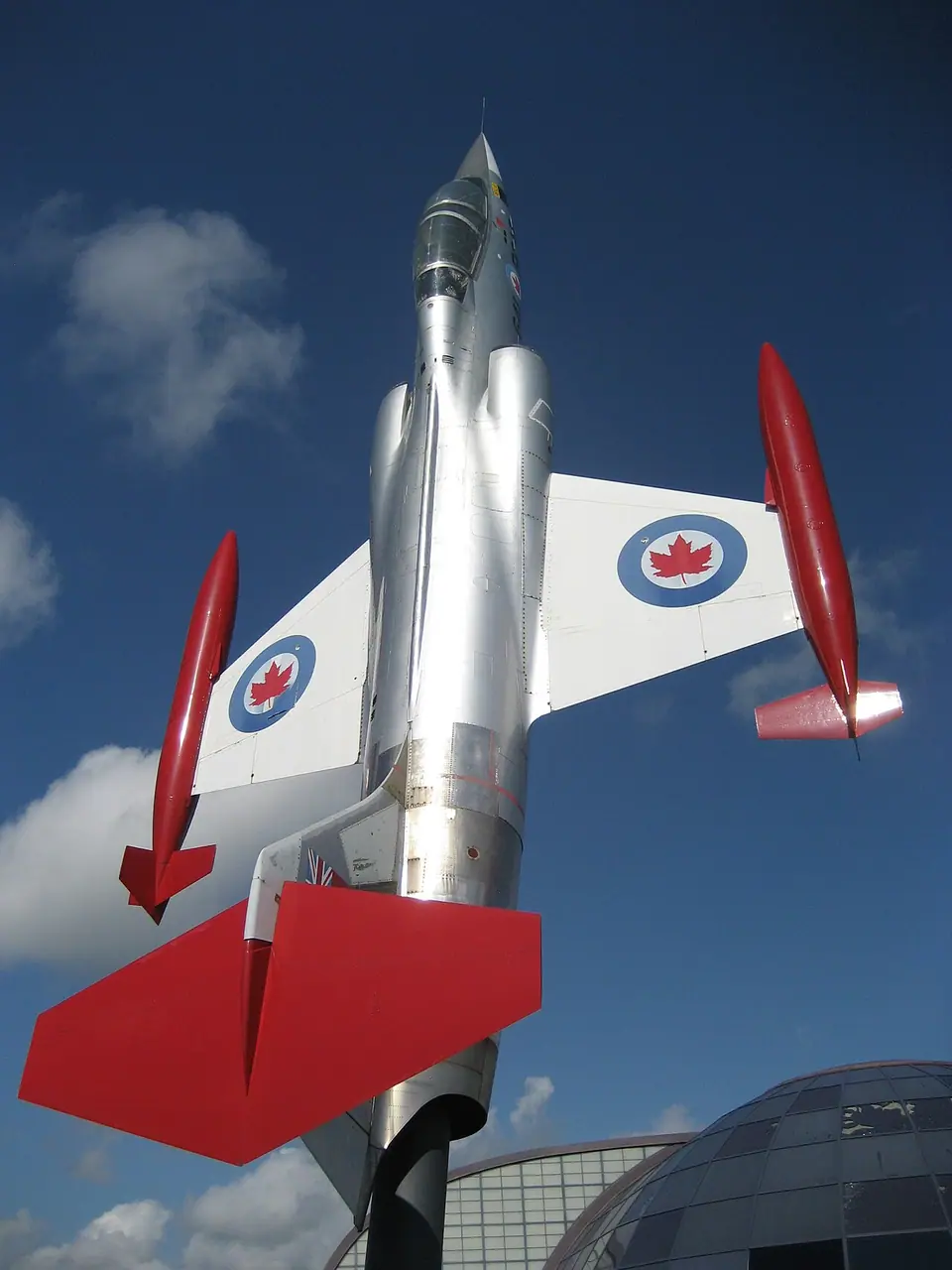
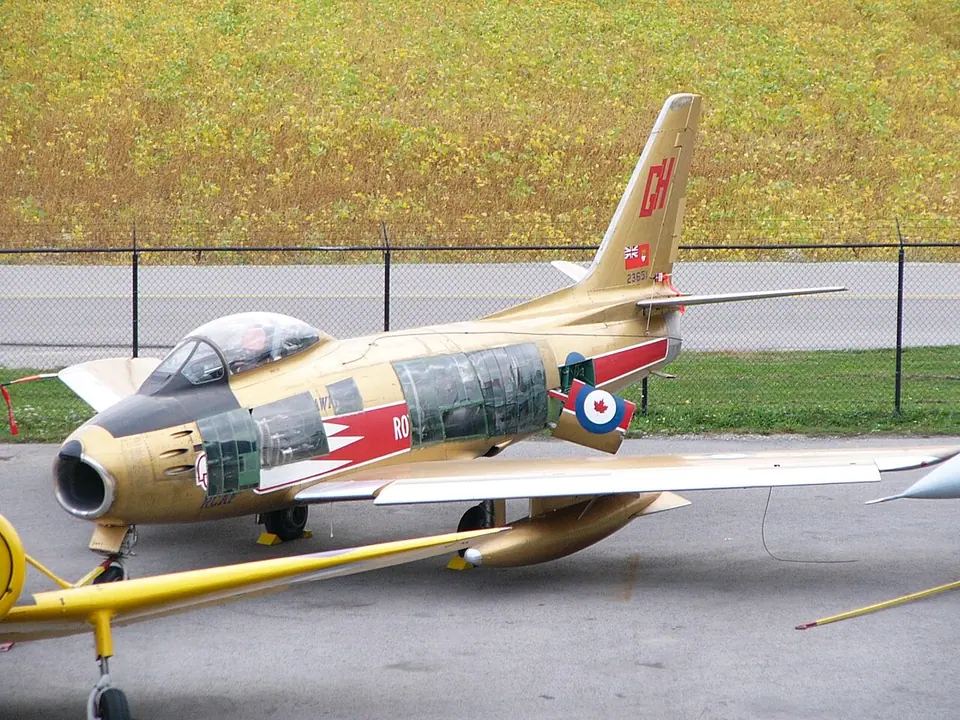
The museum's collection consists of nearly 50 military aircraft, with the goal of keeping them in the air or restoring them to flying condition. Its most famous aircraft is the Mynarski Memorial Lancaster, acquired in 1977 and delivered by Chinook helicopter in 1979. After nearly a decade of restoration, it flew again in September 1988 and remains the only flying Lancaster in North America. In 2014, this Lancaster flew across the North Atlantic to participate in airshows in the United Kingdom. The museum operates with the ICAO airline designator CWH and telephony WARPLANE HERITAGE. In 2023, the museum received three aircraft donated by Ingenium, formerly the Canadian National Aeronautical Collection. The Supermarine Spitfire from this donation is considered a time capsule due to its original condition and will be restored to flight. The Avro Canada CF-100 Canuck is an early Canadian-designed jet interceptor that saw service into the early 1980s. The North American Sabre is a former Golden Hawks aerobatic team aircraft. The museum's team of engineers carefully restores each machine, from early biplanes to modern jets. The Royal Canadian Air Force once had nearly 700 Avro CF-100s in service for defending Canada and Europe.
- A Supermarine Spitfire from 1945, which the museum plans to restore to flying condition.
- An Avro Canada CF-100 Canuck, a Canadian-designed twin-engine, all-weather interceptor used from the 1950s to early 1980s.
- A North American Sabre, a former "Golden Hawks" aerobatic team jet.
- The CF-100 Canuck and Sabre will join the collection on static display.
- The collection also includes a Fairey Firefly, the museum's first aircraft.
- A B-25 Mitchell bomber was added to the collection in 1975.
- Other aircraft in the collection include a Bristol Bolingbroke and a De Havilland Canada S-2 Tracker, both under restoration.
- The flying collection performs at air shows and is available for visitor flights.
The museum's collection is dynamic, with aircraft often being restored to flying condition for air shows and visitor flight experiences. In 2023, the museum's fleet was notably expanded with the donation of three aircraft from Ingenium. These include a North American Sabre that once flew with the famous 'Golden Hawks' aerobatic team, which will remain on static display. The Royal Canadian Air Force once operated nearly 700 of the donated Avro Canada CF-100 Canuck jets, a twin-engine interceptor used from the 1950s into the early 1980s.
 Play video: Thousands gather at Canadian Warplane Heritage Museum for Remembrance Day
Exhibits, programs and visitor experiences
The museum offers a range of interactive exhibits and flight experiences beyond its static aircraft displays. Visitors can operate a jet fighter flight simulator with a working heads-up display and replica controls. A virtual reality experience called BBC 1943 Berlin Blitz was offered until February 29, 2020. The museum also hosts an ongoing Anne Frank House Virtual Reality exhibit. Special events include a plastic scale model contest and talks with life-sized avatars. The Fly Zone is a VR motion simulator designed to create an authentic feeling of flying military aircraft. The museum's gift shop sells items such as diecast plane models, clothing, and calendars. The museum provides personalized tours and school visit programs. Flight experiences are available in various vintage aircraft, including the Lancaster and a Tiger Moth biplane. The museum states it is the only place in the world where a flight in an Avro Lancaster bomber can be purchased. Detailed displays throughout the museum share historic events from Canada's military aviation history. Visitor experiences at the museum extend beyond viewing aircraft to include interactive simulations and virtual reality. Special events throughout the year allow guests to explore the vintage collection in depth, attend talks, and participate in activities like plastic scale model contests. The museum also hosts virtual reality experiences, such as a simulation of the 1943 Berlin Blitz.

Admission and practical information
The museum states that same-day re-entry is permitted with a purchased ticket. The Runway Cafe on site serves breakfast and lunch, with a menu that includes French toast, chicken burgers, grilled cheese, and salads. Free parking is available at the museum location. For visitors who have booked a flight experience, the museum recommends arriving 45 minutes before the scheduled time. The museum is affiliated with several organizations, including the Canadian Museums Association, the Canadian Heritage Information Network, and the Virtual Museum of Canada. The museum's toll-free phone number is 1-877-FIREFLY.
| Item | Detail |
|---|---|
| Address | 9280 Airport Road West, Mount Hope, Ontario L0R 1W0 |
| Phone | +1-905-679-4183 |
| Toll-free | 1-877-FIREFLY (347-3359) |
| Website | warplane.com |
| Parking | Free |
| Dining | Runway Cafe (breakfast, lunch, children's menu) |
| Re-entry | Same-day permitted |
| Affiliations | CMA, CHIN, OMMC, Virtual Museum of Canada |
| Type | Military museum, aviation museum, charitable organization |
The museum operates as a charitable organization. Same-day re-entry is permitted for visitors who purchase tickets at the admission desk. For those who have booked a flight experience, it is recommended to arrive 45 minutes before the scheduled time, or one hour and 15 minutes early for a flight in the Avro Lancaster. The on-site Runway Cafe offers family-friendly dining options including breakfast, lunch, and children's menus.
Getting to the museum
The museum is located in Mount Hope, about half an hour by car from Hamilton. The nearest GO Transit rail station is Hamilton GO Centre, located 11.3 kilometres away in downtown Hamilton. GO Transit offers regular train service on the Lakeshore West line to Hamilton GO Centre during peak hours, with connecting bus service to Aldershot Station off-peak. Hamilton Street Railway provides local bus service to the museum area from the Hamilton GO Centre. The Hamilton GO Centre is a Streamline Moderne building that opened in 1933 as the Toronto, Hamilton and Buffalo Railway station. It was renovated and reopened as the GO Centre on April 30, 1996. The station serves as a terminal for GO bus routes 16, 18, 40, and 47. The station also houses the Toronto, Hamilton and Buffalo Railway Museum on its mezzanine level. Via Rail trains do not serve Hamilton directly but interchange with GO service at Aldershot station in Burlington.
The museum is located at 9280 Airport Road West in Mount Hope, Ontario, with the postal code L0R 1W0. By car, it is approximately a half-hour drive outside of Hamilton and can be reached via Highways 403 West or 400 South, with free parking available on site. For visitors using public transit, GO Transit provides regular train service to the Hamilton GO Centre station, which is about 11.3 kilometers away. From there, connecting bus service to the museum is available through the local Hamilton Street Railway transit system.

The Mount Hope area and nearby places
Mount Hope is a community within the amalgamated city of Hamilton, located in the geographic township of Glanford. The area is dominated by the presence of the John C. Munro Hamilton International Airport. The 2021 census recorded a population of 2,413 for Mount Hope, with a land area of 1.44 square kilometres. Mount Hope was part of the township of Glanbrook before the 2001 amalgamation that created the current City of Hamilton. The City of Hamilton has a population of 569,353, and its census metropolitan area includes Burlington and Grimsby.
- Dark Horse YHM, a bar or pub, is 420 metres away.
- Glanford Curling Club, a sports facility, is 980 metres away.
- Mount Hope Park, an outdoor area, is 1.1 kilometres away.
- Southampton Estates Park is 1.4 kilometres from the museum.
- Southern Pines Golf & Country Club is 1.4 kilometres away.
- Willow Valley Golf Course is 1.9 kilometres from the museum.
- The John C. Munro Hamilton International Airport is immediately adjacent to the museum.
- The community is situated approximately 68 kilometres southwest of Toronto.
Mount Hope is a community within the amalgamated city of Hamilton, located in the Golden Horseshoe region. According to the 2021 census, Mount Hope had a population of 2,413 people. The area offers several recreational options near the museum, including parks and sports facilities within a short distance. Nearby points of interest include Mount Hope Park, Southampton Estates Park, the Glanford Curling Club, and several golf courses, providing visitors with additional activities to enjoy during their visit.
Nearby
- 1Dark Horse YHMBar or pub420 m
- 2Glanford Curling ClubSports facility980 m
- 3Mount Hope ParkPark or outdoor area1.1 km
- 4Southampton Estates ParkPark or outdoor area1.4 km
- 5Southern Pines Golf & Country ClubSports facility1.4 km
- 6Willow Valley Golf CourseSports facility1.9 km
Straight-line distances computed from OpenStreetMap coordinates.
Questions
Where is the Canadian Warplane Heritage Museum located?
The Canadian Warplane Heritage Museum is located at 9280 Airport Road West in Mount Hope, Ontario. Mount Hope is a community within the city of Hamilton, in the Golden Horseshoe region. The museum is situated on the grounds of the John C. Munro Hamilton International Airport. The postal code for the museum is L0R 1W0.
How much does it cost to ride in the Lancaster bomber?
The museum offers the opportunity to purchase a flight in its Avro Lancaster bomber. It is the only place in the world where members of the public can fly in this type of aircraft. The museum recommends that passengers booked for a Lancaster flight arrive one hour and 15 minutes before their scheduled flight time. The Lancaster flight is promoted as a once-in-a-lifetime flying experience. The aircraft is known as the Mynarski Memorial Lancaster in honour of Pilot Officer Andrew Charles Mynarski.
Can I fly in a Lancaster bomber at the museum?
Yes, the Canadian Warplane Heritage Museum offers flight experiences in its airworthy Avro Lancaster, known as the Mynarski Memorial Lancaster. This aircraft is one of only two airworthy Lancasters in the world. The museum states that it is the only place in the world where one can fly in an Avro Lancaster bomber. Flights are part of the museum's program to make its flying collection available to visitors. The Lancaster is painted in the markings of Pilot Officer Andrew Charles Mynarski's aircraft. The aircraft participated in a tour of the United Kingdom in 2014, flying in formation with the Royal Air Force's Lancaster.
What happened in the 1993 fire at the museum?
A fire on February 15, 1993, destroyed Hangar 3 at the museum, causing about $3 million in damage. Five aircraft were lost in the blaze, including a Hawker Hurricane, a General Motors TBM Avenger, an Auster, a Stinson 105, and a Supermarine Spitfire. The Avro Lancaster was saved by a concrete block wall that separated it from the fire. The fire led to the construction of a new 108,000-square-foot facility, which opened in 1996. About 55 firefighters from four fire departments battled the blaze in the predawn hours.
What other aircraft can you fly in at the museum?
Beyond the Lancaster, the museum offers flight experiences in other vintage aircraft from its collection. These include a Tiger Moth biplane. The flying collection performs at air shows and is made available for local flights by museum visitors. The museum's goal is to keep as many aircraft as possible in flying condition or restore them to that state. The museum promotes the chance to purchase a flight on a vintage aircraft as a key visitor experience. The collection includes over 40 military planes from different eras.
What new aircraft did the museum acquire in 2023?
In 2023, the museum received three aircraft donated by Ingenium, the organization formerly known as the Canadian National Aeronautical Collection. The donation included a Supermarine Spitfire from 1945, which the museum plans to restore to flying condition. It also included an Avro Canada CF-100 Canuck, a Canadian-designed jet interceptor, and a North American Sabre from the Golden Hawks aerobatic team. The CF-100 Canuck and the Sabre will remain on static display within the museum's collection. The Spitfire is noted for its original condition and potential to become one of the most original flying examples in the world. The Spitfire served with the Royal Air Force until the early 1950s before being stored.
Sources
- Canadian Warplane Heritage Museum, Wikipedia.
- Hamilton's Canadian Warplane Heritage Museum gets 3 new planes, CBC News.
- Key moments in aviation history at Canadian Warplane Heritage Museum, The Hamilton Spectator.
- Canadian Warplane Heritage Museum, Tourism Hamilton, Tourism Hamilton.
- Canadian Warplane Heritage Museum | Destination Ontario, destinationontario.com.
- Mount Hope, Ontario, Wikipedia.